Recordings: AI is reshaping how we work – also in sustainability
How can you, as sustainability professional, use AI to make your work easier, faster and more effective?
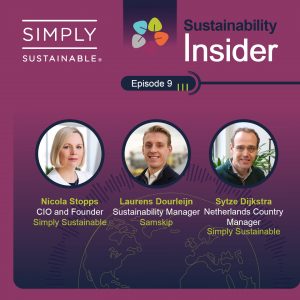
During a live webinar on 7th May we showcased two practical AI solutions that increase efficiency in the sustainability sector. They’re meant as inspiration and a glimpse of what your future day-to-day work could look like.
Two sustainability AI demos
You can download the full webinar or see one of the following solutions, which were co-created with industry partners:
- Environmental Due Diligence Platform (with Kier Group) This solution provides traceable, source-based regulatory guidance and ESRS gap analysis. Helps you navigate complex frameworks with confidence and reduce compliance risk.
- Regulation Advisory Platform (with FincoEnergies) This platform helps streamline fragmented environmental data across sources, enabling faster, more consistent site assessments and clearer insights on key risks.
Get in touch
We’d love to have a chat with you to see how we can support you with your sustainability challenges.

Sytze Dijkstra
Global Head of Client Strategies
Sytze leads Simply Sustainable’s business in the Netherlands, working with European companies on their sustainability strategy, GHG emissions plans and reporting. Sytze enjoys helping companies understand how they can integrate sustainability into their business strategies and has in-depth expertise in preparation and reporting for the Corporate Sustainability Reporting Directive (CSRD).
Before joining Simply Sustainable, Sytze held various roles in sustainability research, thought leadership and consulting, advising companies and governments on strategies for accelerating the transition to sustainable business practices. He brings expertise in modelling transition scenarios, evaluating business cases and developing roadmaps, particularly in the energy sector, transport and logistics and manufacturing.

Harry Freeman
Technical Specialist – Sustainable AI
Harry is a dedicated Technical Specialist in Sustainable AI at Simply Sustainable. With extensive experience in carbon footprint analysis, verification and net-zero strategy development, Harry champions sustainable impact and drives business success through innovative environmental solutions.
Utilising his degree in Property Finance and Investment alongside his PIEMA certification, Harry focuses on delivering business-oriented sustainable transformations.
When we accelerated our AI journey at Simply Sustainable, we did so with a clear understanding of both the risks and the opportunities.
A well-defined AI strategy reduces operational and compliance risks during implementation, by strengthening data management, ensuring accountability and protecting organisational reputation. It also supports workforce engagement and retention, as unclear guidance fuels anxiety, disengagement, and the loss of both domain experts and AI-skilled talent. Over time, over-reliance on poorly governed AI can lead to workforce deskilling, eroding core capabilities and reducing the organisation’s long-term productivity and competitiveness.
In June 2025, we made a strategic decision to put AI at the heart of the business, not to reduce our workforce, but to increase our collective capacity, unlock new value for clients, and free more time for the human thinking and deep collaboration that matter.
To achieve this, we built three foundations:
- Robust governance: First, simple but robust governance that enables safe experimentation with clear guardrails, giving people the confidence to try new ideas while protecting client trust and data integrity.
- Company upskilling: Second, whole-company upskilling that ensures AI isn’t owned by a technical few but becomes a shared capability across the organisation. Everyone now has the capability and empowerment to develop AI applications and incorporate this into their workflows and solution innovations.
- Culture: Thirdly, a culture that elevates both human and AI strengths, viewing AI as an enabler, reducing low-value tasks and enhancing judgment, creativity and analytical depth. This has improved the quality of our analysis, increased productivity and allowed us to co-create novel solutions with clients.
We’re a small and agile business, which has helped us move quickly. But we believe this model scales. With thoughtful leadership, AI can, in addition to creating financial value through efficiency and innovation, strengthen human capital through skills and engagement, and social capital by maintaining employment and elevating humans to solve the big challenges of our time.
In short, AI done well is good for business, good for people and good for society, and we believe our own transition offers a practical blueprint for others.