Written by: Charlotte Barker, Technical Specialist | Last updated: 05.10.2026
Climate and nature have shaped the sustainability reporting agenda in recent years. TISFD signals a growing focus on how businesses affect, and depend on, people across their operations and value chains. This includes their own workforce, workers in the value chain, communities, consumers and the wider social systems that support economic activity.
For many organisations, this is not new territory. Relevant information may already sit across workforce strategy, procurement, human rights, community impact, customer experience and social value activity. The challenge is bringing those perspectives together and understanding what they mean for business decisions.
What is TISFD?
The Taskforce on Inequality and Social-related Financial Disclosures, or TISFD, is developing recommendations and guidance to help businesses and financial institutions understand and report on people-related impacts, dependencies, risks and opportunities.
The TISFD framework considers how an organisation’s activities, products, services and business relationships affect people, including their human rights, wellbeing and access to opportunity. It also considers how organisations depend on people and wider social systems, from a skilled workforce and resilient communities to stable institutions and public services.
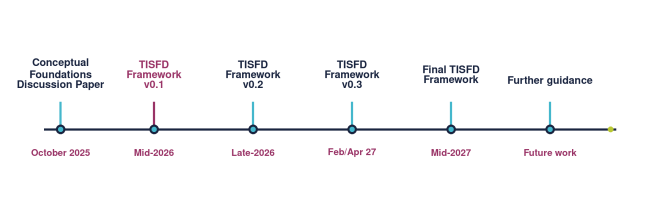
TISFD published Beta Version 0.1 in mid-2026. Its first public consultation closed on 31 July 2026, and as of September 2026, the Taskforce is processing feedback. Its published roadmap indicates a further beta version later in 2026, Version 0.3 in mid-2027 and a final TISFD Framework later in 2027. TISFD also plans a further 90-day consultation on its final draft.
Why should businesses be watching the TISFD framework?
People-related issues can have clear business consequences.
Poor labour practices, inequality, weak community relationships or consumer harm can affect productivity, supply-chain resilience, reputation, customer trust, market access and access to capital. Equally, investment in skills, wellbeing, inclusion and fair opportunities can support innovation, resilience and long-term value creation.
Relevant information is often dispersed across the organisation. A people team may hold workforce data, procurement teams may understand supply-chain risks, and sustainability or community teams may have insight into wider social impacts. But these perspectives are not always brought together in a way that supports strategic decision-making. TISFD offers a framework for understanding where an organisation affects and depends on people, and how those relationships may create risks or opportunities.
What does the current TISFD framework cover?
The current beta follows the familiar four-pillar structure used by TCFD and TNFD. It includes draft disclosure recommendations across governance, strategy, and impact and risk management. Recommendations on metrics and targets are planned for future iterations. In practice, this means considering questions such as:
Governance: Who is accountable for people-related impacts, dependencies, risks and opportunities, and how are these issues considered by senior leadership and the board?
Strategy: Where are the organisation’s most significant relationships with people, and how could these affect resilience, strategic priorities or long-term performance?
Impact and risk management: How does the organisation identify, assess, prioritise and respond to relevant issues across its operations and value chain?
Materiality is central to this approach. In simple terms, it means focusing on the people-related issues that are significant enough to inform decisions and disclosure, rather than trying to report everything. TISFD proposes that organisations disclose material information about people-related impacts, dependencies, risks and opportunities, alongside the way they have engaged affected stakeholders.
This will be familiar to organisations reporting under CSRD, or preparing for potential UK SRS requirements, although TISFD is still developing its own approach to materiality.
This should not feel like another framework to bolt on. Most organisations already hold useful information across procurement, people, sustainability and risk. The opportunity is to bring it together and use it to make better decisions about where the business affects, and depends on, people. Charlotte BarkerTechnical Specialist
How does TISFD fit with existing sustainability reporting?
TISFD is intended to complement, rather than replace, existing reporting approaches. It draws on established standards including ESRS, GRI and ISSB Standards, and offers a useful additional lens on people-related impacts, dependencies, risks and opportunities. For most organisations, the useful question is simple: where does the business have the greatest effect on people, where does it rely on them, and where could those relationships influence decisions or performance?
The practical opportunity is to make better use of information that already exists. For UK organisations, this may include work on responsible procurement, local employment, skills, inclusion, community impact, supplier engagement and human rights.
Some organisations may already have useful insight through social value activity. Social value and TISFD have different purposes and scopes, but the data, ownership and evidence developed through social value work can help organisations understand people-related impacts and avoid duplication as they respond to the emerging TISFD framework.
How can organisations prepare for TISFD now?
The practical starting point is not a separate TISFD workstream. It is to build on the information, governance and processes already in place. This can also help organisations preparing for CSRD reporting, where applicable, or considering voluntary use of UK SRS to understand relevant social information and gaps.
Map people-related impacts and dependencies. Identify where the organisation affects, and depends on, workers, communities, consumers, suppliers and wider social systems. Focus on the relationships most relevant to the business and its stakeholders.
Bring together existing information. Review the data, evidence and stakeholder insight already held across HR, procurement, sustainability, risk, legal, customer teams and community activity. This can highlight useful foundations, as well as gaps in coverage, consistency or ownership.
Clarify ownership and decision-making. Consider who is responsible for identifying and managing people-related issues, how these are escalated and where they should inform business decisions. This might include workforce resilience, productivity, supply-chain disruption, customer trust or market access.
Set proportionate next steps. The aim is not to create a separate programme solely because TISFD is emerging. It is to strengthen the data, governance and stakeholder engagement that will support a more credible approach over time.
TISFD is still developing, but organisations that begin to understand these issues now will be better placed to respond as expectations evolve and strengthen existing social value, sustainability and business priorities.
Whether you are looking to understand people-related impacts and dependencies, strengthen social value and wider social sustainability activity, or prepare for emerging disclosure expectations, Simply Sustainable can help identify practical, proportionate next steps. Explore our Impacts and Dependencies and Social Value and Impact services to see how we can help, or get in touch to start the conversation.
Social Value in practice
A practical guide to building a credible approach.
Five principles that can help organisations move from disconnected activity and commitments towards a more credible and joined-up approach.
We help you understand how your business impacts the world around it. And what it depends on. So you can manage risks, uncover opportunities, and make smarter, more sustainable decisions.
Sustainability can be a complex landscape, we work with your organisation to fully equip your employees and stakeholders with the necessary skills and knowledge so everyone can engage in your strategies.