EU green claims rules are changing: What the EmpCo Directive means for businesses
Written by: Camila Buhler, Client Strategies Partner| Last updated: 14.09.2026
From “eco-friendly” packaging to “carbon neutral” products, environmental claims have become a familiar part of how businesses communicate with consumers.
From 27 September 2026, the rules governing those claims across the EU are getting significantly stricter.The Empowering Consumers for the Green Transition Directive (EU) 2024/825, commonly referred to as the EmpCo Directive, strengthens EU consumer protection against greenwashing and introduces new requirements around environmental claims, sustainability labels, product durability and repairability.
For businesses selling to EU consumers, this deserves attention beyond the sustainability team. Marketing, legal, product, procurement and sustainability teams all have a role to play in making sure claims can withstand greater scrutiny.
What is the EmpCo Directive?
The EmpCo Directive amends two existing pieces of EU consumer legislation: the Unfair Commercial Practices Directive and Consumer Rights Directive.Its purpose is to give consumers clearer, more reliable information and strengthen protection against greenwashing and practices associated with early obsolescence. EU Member States had until 27 March 2026 to transpose the Directive into national law, with the new requirements applying from 27 September 2026.
The change comes against a backdrop of widespread concern about the reliability of environmental marketing. European Commission research found that 53% of green claims provided vague, misleading or unfounded information, while 40% had no supporting evidence.
The direction of travel is clear: environmental messaging needs to become more specific, credible and evidence-based.
Which green claims are affected?
One of the most significant changes concerns generic environmental claims.Terms such as “green”, “eco-friendly”, “climate friendly” and “environmentally friendly” will be prohibited where recognised excellent environmental performance relevant to the claim cannot be demonstrated. The legislation also covers similar language that creates an impression of excellent environmental performance.
Specificity matters.For example, describing packaging simply as “climate-friendly” could fall within the generic claims prohibition. A specific statement explaining that 100% of the energy used to produce the packaging comes from renewable sources is treated differently, although it must still comply with wider consumer protection requirements.
This creates an important shift for marketing teams: sustainability language needs to communicate what has actually improved, by how much, and in relation to what.
Carbon neutral claims face particular scrutiny
Businesses should pay particular attention to product-level carbon neutral and climate neutral claims.Under EmpCo, businesses cannot claim that a product has a neutral, reduced or positive impact on greenhouse gas emissions where that claim is based on offsetting emissions outside the product’s value chain. Examples identified by the Directive include terms such as “climate neutral”, “carbon positive” and “CO2 neutral certified”.
That does not mean companies have to stop investing in high-quality environmental or carbon credit projects. They can still communicate those investments, provided the communication itself is not misleading.For many organisations, this will require a review of both the claims being made and the carbon data sitting behind them.
Sustainability labels are changing too
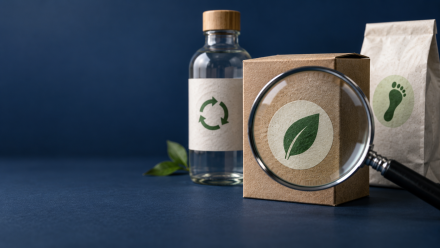
The rules also tighten the use of sustainability labels.Businesses will no longer be able to display sustainability labels that are not based on a certification scheme or established by a public authority. This is intended to reduce the proliferation of self-created environmental badges and logos that consumers may reasonably interpret as independent verification.
Businesses using environmental logos, product badges or proprietary sustainability marks should therefore understand what each label represents, who verifies it and whether its use will remain appropriate.
The scope goes further still. EmpCo introduces requirements relating to durability, repairability, legal guarantees and software updates, including practices that may contribute to products becoming obsolete earlier than consumers expect.
What should businesses be doing now?
With the rules applying from 27 September, businesses selling to EU consumers have a limited window to make sure their sustainability communications are ready.
A useful starting point is a green claims audit covering websites, advertising, product descriptions, packaging, point-of-sale materials, sustainability labels and other consumer-facing communications.
From there, organisations should consider four questions:
Which environmental claims are currently being made? Create a clear inventory, including claims that may have become embedded in longstanding marketing materials.
What evidence supports each claim? Connect communications to the underlying sustainability data, methodologies and certifications.
Are claims sufficiently specific? Review broad terms such as “green”, “sustainable”, “eco-friendly” or “climate friendly” and determine whether they accurately describe what can be demonstrated.
Who signs off environmental communications? Clear governance can help sustainability, marketing, product and legal teams understand who owns the evidence and who approves the final claim.
This is also an opportunity to improve the quality of sustainability communications. Stronger evidence does not have to result in cautious or technical marketing. Specific claims can often be more compelling, because they tell customers exactly what a business has achieved.
From sustainability data to credible communication
EmpCo reinforces something businesses are already experiencing across the sustainability landscape: sustainability data increasingly needs to support decisions and communications beyond formal ESG reporting.
A claim on packaging may start with a marketing team, but substantiating it could depend on carbon calculations, supplier information, product data, certification and governance processes from across the organisation.
Businesses that connect those pieces effectively will be better positioned to communicate sustainability progress with confidence.
—
At Simply Sustainable, we help organisations turn sustainability strategy, data and performance into credible communications. If you’re reviewing your environmental claims or want to understand whether the sustainability evidence behind your communications is strong enough, get in touch with our team.
EmpCo signals a fundamental shift in sustainability communications – from broad environmental promises to evidence-backed claims. Organisations that invest now in connecting sustainability data, governance and communications will be better positioned to build trust, demonstrate progress and stand out in an increasingly scrutinised marketplace.”Camila BuhlerClient Strategies Partner
Impacts and dependencies
We help you understand how your business impacts the world around it. And what it depends on. So you can manage risks, uncover opportunities, and make smarter, more sustainable decisions.
Sustainability can be a complex landscape, we work with your organisation to fully equip your employees and stakeholders with the necessary skills and knowledge so everyone can engage in your strategies.